my blog
I was supposed to be a worm tonight, logged into a Harris Poll site with lots of little buttons to express approval and disapproval of the three UK leaders of the major political parties as they debated. This creates little lines, blue, yellow and red, tracking reactions to the politicians as they spoke. The BBC has used worms for the last two debates and they've captured the public fancy.
The BBC worm folk were all undecided voters. They expressed disapproval at any attacks by one politician on the policies of the other two. At this point, I think a really uncommitted voter is probably not very politically aware or interested. In debates, you disagree. Cameron attacked Clegg on the LibDem amnesty for illegal immigrants: the blue worm dipped. Brown attacked Cameron on cutting tax credits: the red worm dipped. What do they want? The Marshmallow Party? Even Clegg, White Knight that was unknown three weeks ago, had a worm slump when he disagreed with Cameron.
Nice. They want nice people. Simple. They want simple answers. Democracy is a way of selecting rulers; there's nothing implied about the quality of government you get as a result.
I read the newspapers this morning: Cameron is seen to have won the debate. He didn't answer the questions, he didn't respond to challenges from Brown or Clegg. Brown was a technocrat - he understands the problem and offers a rational way of dealing with it. Clegg came across as knowledgeable and competent; in addition, he was easier to understand than Brown and actually had something to understand, unlike Cameron. I would have ranked performance as Clegg, followed closely by Brown and Cameron in third place; totally unlike the rest of the British population.
I watched Question Time after the debate - representatives from the three major parties, plus a journalist/populist and the leader of the Scottish Nationalist Party. Someone asked if the major parties would raise VAT if elected (VAT - a tax imposed on most goods and services at the point of purchase. They said they had no plans to but could not rule it out. They were jeered. A woman said tell them the truth. Complexity again: too many variables to say. These people appear to demand lies. For example, at some point the rescued banks will do well. The UK took stock in the banks, which can be sold at that point - should make a profit. That can go into paying the deficit. At some point, troops will return from Iraq and Afghanistan. A major saving there. Maybe VAT will be raised and maybe it won't. Demanding a commitment either way is not really possible. When politicians refuse to rule it out, they are being honest.
I live in Canterbury. My vote doesn't really count - the Conservative will win. I probably like the LibDem policies best; I'll probably vote Labour. I think Brown has been treated shamefully, maliciously. For example, he is blamed for the current recession. That's absurd. If you want to blame someone other than the financial services, blame Thatcher and Reagan for de-regulating the banks.
The Chairman of the Bank of England said whichever party was elected could forget being re-elected for a generation: the kinds of austerity measures required would be so unpopular it would take that long for a political party to recover.
The future actually looks pretty bleak. Cameron's probable win makes it a lot bleaker.

Friday, 30 April 2010
UK Elections: The Third Debate
guardian.co.uk
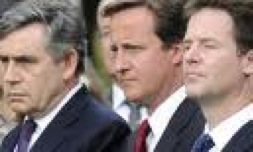
Brown, Cameron and Clegg