my blog
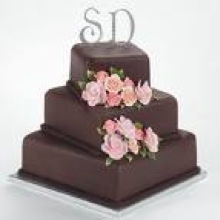
I am what is known as "a good plain cook". I've never been tempted to get above myself; my son, after a visit to Atlanta when he was about nineteen, told me that he thought I was a really good cook until he ate my sisters' food. Fair enough: Chris is the Queen of Cakes and Bonnie makes spectacular barbecue. Both are traditional Southern cooks and they never cook one chop a person - it would be shameful if there weren't lots of left overs.
Chris, Bonnie and I learned to cook from watching my mother and cook books. My first experience with cooking came from cookies in the Betty Crocker Cookbook when I was nine. My mother decided some chores were in order; mainly because she thought I should learn to do things like properly wash dishes. The sweetner was cooking: after the breakfast dishes were done, the counters wiped down and the floor swept, I could make cookies.
My mother went to work selling real estate when I was eleven. My father worked the swing shift, 4 PM to midnight. Realtors show houses in the evening, when people aren't at work. So I became babysitter and cook. I wasn't very good at either.
I kept Nick, Jerry and Ed from killing each other. I kept Bonnie, Peter, Chris and David from dying inadvertently. That's the best that can be said for my babysitting performance.
In terms of cooking, I substituted presentation for taste. A favorite dish involved frozen hamburger patties, peeled sliced potatoes and sliced onions, layered and cooked in the oven. The result was both charred and kind of raw. However, we were hoboes and this was a hobo dish. We sat under the kitchen table to eat it. We were waiting for a freight train, on our way to California.
Sometimes we had fetes, (pronounced feets) and we would string pictures cut out of the funny papers around the kitchen. I'd make a sheet cake and we'd cut it into trains or giraffes.
My brother Nicky was an interested contributor. He suggested, once when the cabinet was particularly bare, putting a bit of everything in the fridge and cupboard into a giant stew, named Poverty Soup. (He was about ten.) We did. We agreed that if it hadn't been for the canned sweet potatoes it might have been edible.
The only real hassle was making sure the kitchen was cleaned sufficiently when the adults came in.
At some point, when I was about fourteen, my mother's real estate work provided funds for hired help. I was then only responsible for Sunday dinner. Much worse experience: my father had no interest in presentation and he didn't want anything that didn't taste like he was used to. I had started using cook books extensively, and sometimes recipes called for garlic. His reaction was enough to turn someone off cooking forever.
But I like food. I like cooking. I love cook books. After leaving home, I started cooking with a lot more pleasure.
In Texas, I fell in love with Mexican food. It was almost like some of the stuff I grew up with. Pinto beans, southern style, have salt pork and onions added for flavour. In Texas, I started adding chili powder, cumin, black peppercorns and garlic.
In Montreal, I discovered knowledgeable butchers. One gave me a weekly kind of meat tutorial.
1. Meat on the bone is more flavorful than meat off the bone.
2. In considering roasts, a bigger piece of cheaper meat turns out better than a smaller piece of more expensive meat.
3. Cheaper cuts often have more flavour but need to be cooked differently - generally, slower, often with liquid and braised rather than baked.
Montreal also had a farmer's market, where I bought vegetables. It had a section that specialized in Caribbean ingredients. Some of these were similar to the food I grew up with, things like turnip greens. I tried some of their other specialties like a salted cod that came in a wooden box and needed to be soaked in water to take out the salt, then cooked with potatoes and onions.
Montreal provided another great learning tool: Madame Benoit's cookbook. It's huge. It has sections on how and why certain techniques are required. I've still got it, it's falling apart and still used fairly often.
When I moved back to Austin for graduate school, I learned about planning and menus. We had a monotonous routine: Sunday, some sort of roast with potatoes, veg and gravy. Monday, it was turned into hash. I also learned about freezers. In addition to the Sunday roast, I cooked a pound of ground beef; browned with onions and garlic, then a couple of cans of tomato sauce poured in and simmered. On Tuesday, half of this was turned into chili (cumin, chili powder and kidney beans added). On Wednesday, it became spaghetti sauce. Wednesday was macaroni and cheese. Friday, I bought a take away and we had KFC or pizza. Saturday was variable.
In Pakistan, I discovered South Asian Food. I cook it, using cook books. At least I know how it should taste even if I don't always replicate it.
In Canterbury, my main cooking experiences have come after retirement. I watch cooking shows on tellie and use cook books. I admire professional chefs; I could never be one. After watching something like Masterchef, my reaction is to say for heaven's sake, it's only food.
Levi-Straus wrote a book, The Raw and the Cooked. He sets up a series of contrasts between Nature and Culture. Food is nature but cooking is part of culture.
As more work is done on the higher primates, the distance between our cousins and ourselves becomes less and less obvious. Tools? They use them. They even make them. Food processing? Yes. I saw a recent documentary on the skill with which a certain kind of monkey manages to crack and process a particular nut. (David Attenborough's series induce both a sense of belonging to the natural order and a humility at being top of the food chain. You feel a lot less clever as a species after watching them.)
It's the run up to Christmas. I've ordered the Christmas turkey, free range, 11 to 12 pounds. I'll make Christmas cake next week. I'm considering a gingerbread house; I consider it every Christmas and decide it's too much trouble. (That's the sort of thing my daughter might do with the children.) Sometimes I make fancy cookies, cut out and frosted. Maybe this year, maybe not. But Christmas dinner is engraved in stone: in my family, the ten commandments are more or less advisory; you don't break them unless it's really important.
I ignore the first three more or less. The fourth? Well, parents need to deserve respect. Forgiveness is rather obligatory, but not respect. The rest: I've never killed anyone but can imagine doing so. Except for a period when I was ten and I shoplifted a mound every Friday from the local store, I haven't stolen anything. The rest aren't particularly appealing so I take no credit for not having broken them.
But Christmas dinner has to have turkey and dressing and gravy; mashed potatoes and sprouts or asparagus or little bittie peas; pecan pie and mincemeat pie (which nobody really likes) and fruit cake. (My husband always argues for two pecan pies and no mincemeat. He doesn't understand; you don't have t like it. It's the way things are.) The turkey has to be big enough for left overs but cannot last longer than boxing day. The skeleton makes stock that is frozen and used throughout January.
There's a sadness to it. I've lost the liturgical year. Christmas Eve is a day of fasting; we had oyster stew on Christmas Eve. I never liked oyster stew so we don't have it. We don't fast, either. There's no question of Midnight Mass. Christmas is a secular holiday and the rest is myth. Important myth, things to be learned, as they say, but myth.
What's left is the food, the tree and the gift giving. If the children aren't coming, I don't bother with tree. I enjoy giving the gifts, always give them, but I give gifts at other times, other occasions. It's the food that is definitively Christmas. If Michael is gone and I'm at home alone Christmas, I don't bother with a turkey. That's the only occasion - even if it's simply spouse and me, we'll have a turkey. I could write a personal memoir based on learning to cook. It's not finished - I expect to get better, at least until the old people's home and gruel and watery soup. But even then, I'm sure I'll somehow know that oatmeal is best served with cinnamon toast.
Food and family go together. It's individual and unique while being part of one's history and culture. The Raw and the Cooked: forget the incest taboo. It's beef stew that shows the transition from nature to culture.

Friday, 27 November 2009
Food and Learning to Cook
I can’t make that cake, but Chris could.